Why Montessori Activity Tables Are Among the Best Educational Toys for Toddlers
Toddlers are naturally curious. From the moment they begin sitting independently and exploring the world around them, they become little investigators who want to touch, sort, spin, stack, pull, and discover how things work. This curiosity is more than just a phase—it is one of the most important drivers of early childhood development.
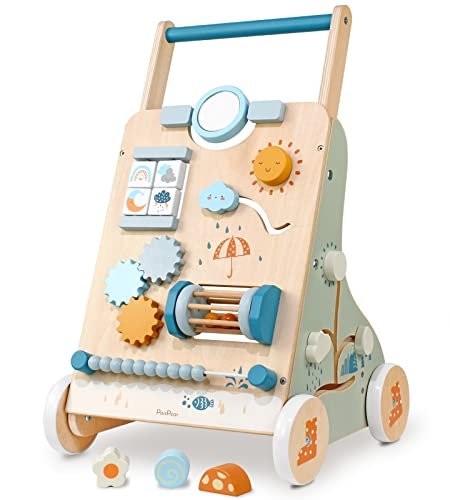
Parents often search for toys that do more than simply entertain. They want activities that encourage learning, build confidence, and support important developmental milestones. That's where Montessori-inspired activity tables stand out. By combining multiple hands-on learning experiences into one engaging play station, these educational toys encourage children to learn through exploration and self-discovery.
A well-designed wooden activity table offers countless opportunities for sensory play, fine motor development, problem-solving, and independent learning. Instead of relying on screens or passive entertainment, children actively participate in every activity, turning playtime into a meaningful learning experience.
Whether used at home, in a classroom, or during family visits, a multifunctional activity table can become one of the most valuable tools in a young child's developmental journey.
Understanding the Montessori Approach to Learning
The Montessori philosophy emphasizes hands-on learning, independence, and exploration.
Rather than directing every activity, Montessori-inspired toys encourage children to discover solutions on their own. This process helps build confidence while allowing children to learn at a pace that feels natural to them.
Activity tables align perfectly with this approach because they offer multiple opportunities for self-guided play. Children can choose which activity interests them, experiment freely, and develop new skills through repetition and exploration.
The result is a learning experience that feels enjoyable rather than structured, helping children remain engaged for longer periods.
Multiple Educational Activities in One Play Center
One of the greatest benefits of a Montessori activity table is its versatility.
Instead of purchasing separate toys for different developmental skills, parents can provide a single activity center that offers a wide variety of learning opportunities.
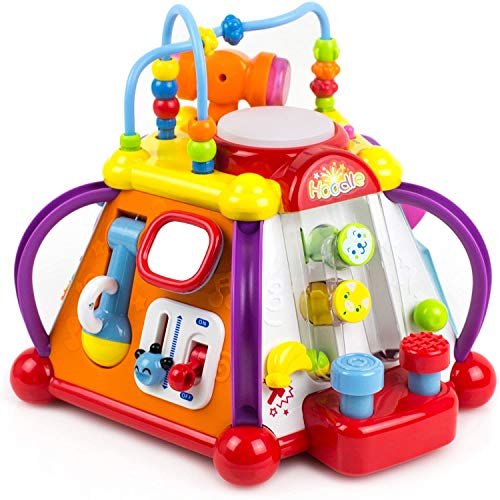
Bead Maze Exploration
Bead mazes remain a favorite among toddlers because they combine movement, concentration, and problem-solving.
As children slide colorful beads along winding tracks, they strengthen hand muscles, improve coordination, and learn how objects move through space. These simple activities also encourage patience and focus.
Shape Matching and Shape Sorting
Shape activities introduce children to early geometry concepts while developing critical thinking skills.
Matching shapes encourages visual recognition, spatial awareness, and logical reasoning. Children must analyze each piece and determine where it belongs, helping strengthen problem-solving abilities through trial and error.
Fishing and Harvest Games
Interactive games such as fishing and carrot harvesting create opportunities for imaginative play while developing coordination.
Picking up small pieces requires precision and control, helping strengthen fine motor skills and hand-eye coordination. These activities also encourage concentration and persistence.
Animal Mazes and Interactive Challenges
Maze activities introduce children to planning, sequencing, and problem-solving.
As toddlers guide pieces through pathways, they learn to anticipate movement and think ahead, building foundational cognitive skills that support future learning.
Spinning Gears and Cause-and-Effect Learning
Gears and rotating components introduce young children to basic mechanical concepts.
When toddlers spin one gear and see another move, they begin understanding cause and effect relationships. These discoveries encourage curiosity and experimentation while fostering early scientific thinking.
Supporting Fine Motor Development Through Play
Fine motor skills involve the small muscles of the hands, fingers, and wrists.
These skills are essential for countless everyday activities, including feeding, drawing, writing, dressing, and using tools.
Strengthening Little Hands
Many activity table features require grasping, twisting, turning, pinching, and lifting.
These repeated movements help strengthen hand muscles while improving dexterity and control.
Developing Hand-Eye Coordination
Successfully moving a bead, fitting a shape, or catching a toy fish requires coordination between visual input and physical movement.
As children practice these skills, their ability to perform increasingly complex tasks improves.
Preparing for Future Learning
Strong fine motor skills help prepare children for preschool and beyond.
Activities that strengthen these abilities during toddlerhood create a foundation that supports academic and practical skills later in life.
Encouraging Cognitive Growth and Problem-Solving
Learning through play allows children to develop important cognitive abilities without pressure.
Building Critical Thinking Skills
Every activity presents a small challenge.
Children must decide how to move a bead, where a shape belongs, or how to navigate a maze. These challenges encourage logical thinking and experimentation.
Understanding Cause and Effect
Interactive features teach children that actions create results.
When a gear spins, a bead moves, or a shape fits correctly, children gain a deeper understanding of how the world works around them.
Improving Concentration
Many activity table games naturally encourage focus and persistence.
Children often become deeply engaged as they attempt to complete tasks, helping strengthen attention spans over time.
Sensory Play Benefits for Growing Minds
Sensory experiences play an important role in early childhood development.
Activity tables provide opportunities for children to engage multiple senses simultaneously.
Visual Stimulation
Bright colors, animal designs, and moving parts help capture a child's attention and support visual development.
Tactile Exploration
Different shapes, textures, and surfaces encourage children to explore through touch.
These experiences help build sensory awareness while supporting cognitive development.
Interactive Discovery
The combination of movement, textures, and hands-on activities creates an engaging environment that encourages continuous exploration.
Why Wooden Toys Continue to Be a Parent Favorite
Wooden educational toys have remained popular for generations, and for good reason.
Exceptional Durability
Wooden activity tables are often built to withstand years of enthusiastic play.
Their sturdy construction makes them suitable for families with multiple children and for shared environments such as classrooms and daycare centers.
Timeless Appeal
Unlike trendy electronic toys that quickly lose interest, wooden activity tables offer enduring educational value.
Children return to them repeatedly because the activities continue to challenge and engage as their skills develop.
Reduced Overstimulation
Many parents appreciate toys that encourage focused play without excessive flashing lights or loud sounds.
Wooden activity tables provide meaningful engagement while allowing children to explore at their own pace.
Safety and Quality Matter
Parents naturally prioritize safety when selecting toys for young children.
Smooth, Child-Friendly Design
Quality activity tables feature carefully rounded edges and smooth surfaces designed for safe everyday use.
Non-Toxic Materials
Many Montessori-inspired toys use water-based paints and child-safe finishes, helping create a safer play environment.
Stable Construction
A sturdy design helps reduce tipping and provides a reliable play surface for active toddlers.
Perfect for Home, Travel, and Storage
Practical features make activity tables even more appealing for busy families.
Easy Assembly
Simple assembly allows parents to quickly set up the toy and start enjoying its benefits.
Compact Storage
Removable components and detachable legs often make storage easier when space is limited.
Travel-Friendly Features
Portable elements such as removable bead mazes can provide entertainment during travel, family visits, or outings.
A Thoughtful Gift for Curious Toddlers
Finding a gift that combines fun and educational value can be challenging.
A Montessori activity table offers:
- Multiple developmental activities
- Long-lasting durability
- Independent learning opportunities
- Screen-free entertainment
- Support for fine motor and cognitive development
These qualities make activity tables popular choices for birthdays, holidays, baby showers, and milestone celebrations.
Encouraging Parent-Child Interaction
Although activity tables are excellent for independent play, they also create wonderful opportunities for connection.
Parents can help identify shapes, count objects, name animals, discuss colors, and celebrate achievements. These interactions support language development while strengthening emotional bonds.
Simple conversations during play often become valuable learning experiences that children remember long after the activity ends.
Final Thoughts
A Montessori-inspired wooden activity table is much more than a toy. It serves as an interactive learning center where children can develop fine motor skills, strengthen problem-solving abilities, improve hand-eye coordination, and explore the world through hands-on discovery.
With engaging activities such as bead mazes, shape sorting, fishing games, spinning gears, animal mazes, and harvesting challenges, these versatile play centers provide countless opportunities for learning and growth. Their durable wooden construction, educational value, and timeless design make them a favorite among parents, educators, and children alike.
For families seeking a toy that combines creativity, learning, and long-lasting entertainment, a multifunctional activity table can become an important part of a child's early developmental journey while creating countless moments of joyful exploration.